-
EU Market Launch 100 — Europe-Ready Chemical Store
€2,999.00 Get SDS documentation -
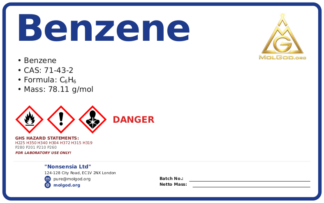
benzene (CAS 71-43-2) — Safety Data Sheet
Price range: €49.99 through €249.99 -
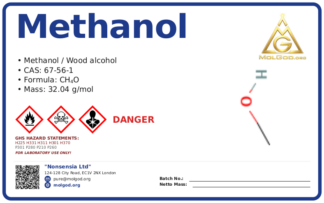
methanol (CAS 67-56-1) — Safety Data Sheet
Price range: €49.99 through €249.99 -
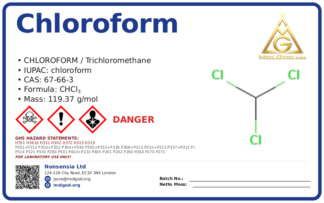
chloroform (CAS 67-66-3) — Safety Data Sheet
Price range: €49.99 through €249.99 -
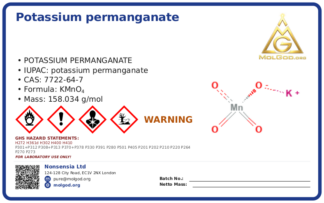
potassium permanganate (CAS 7722-64-7) — Safety Data Sheet
Price range: €49.99 through €249.99 -
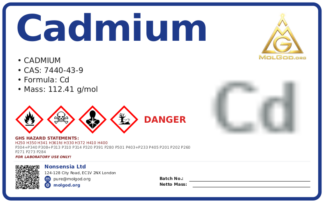
cadmium (pyrophoric) (CAS 7440-43-9) — Safety Data Sheet
Price range: €49.99 through €249.99 -
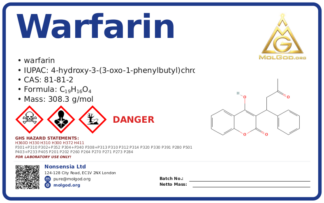
warfarin (CAS 81-81-2) — Safety Data Sheet
Price range: €49.99 through €249.99 -
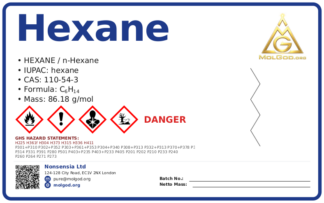
n-hexane (CAS 110-54-3) — Safety Data Sheet
Price range: €49.99 through €249.99 -
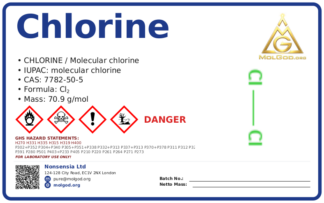
chlorine (CAS 7782-50-5) — Safety Data Sheet
Price range: €49.99 through €249.99 -
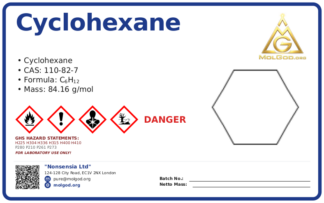
cyclohexane (CAS 110-82-7) — Safety Data Sheet
Price range: €49.99 through €249.99 -
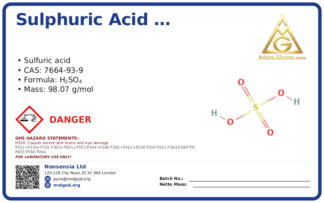
sulphuric acid … % (CAS 7664-93-9) — Safety Data Sheet
Price range: €49.99 through €249.99 -
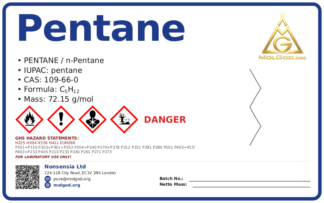
pentane (CAS 109-66-0) — Safety Data Sheet
Price range: €49.99 through €249.99
One chemical record. Many possibilities.
MolGod organises chemical identity, scientific data, regulatory status and documentation around the substance itself. Search once, read what is known, check where it came from, then take the document you actually need.
- CAS number
- Chemical identity
- Scientific data
- Regulatory status
- Documentation
Why MolGod
Built around the substance, not around the document.
- Classification read against the harmonised entry
- Where CLP Annex VI carries a harmonised entry for a substance, that entry governs the classification shown, and the index number is stated. The reference layer holds 4,167 CAS numbers carrying a harmonised classification, across 3,817 Annex VI index entries.
- Regulatory status across five jurisdictions
- Inventory status is shown against seven lists: REACH Annex XIV and the SVHC candidate list in the EU, SVHC in the UK, TSCA in the US, DSL and NDSL in Canada, AICS in Australia.
- Identity resolved across sixteen systems
- CAS, EC, InChI, InChIKey, SMILES, PubChem, ChemSpider, ChEMBL, KEGG, DrugBank, MeSH, HMDB, UNII, NSC, Wikidata and more. Each card shows how many of the sixteen were resolved, so you can see how well characterised a substance is rather than assuming.
How a document is built, which datasets stand behind it and what is deliberately not checked: documentation methodology.
Transparent by design
- No chemical is sold, supplied or shipped
- Digital delivery only
- Review status stated on every document
- Sources identified, not implied
- Limitations written down, not buried
- No certification claimed — none exists for safety data sheets in the EU
What we will not do with your documents
Worth stating plainly, because each of these is something a documentation supplier could pretend to cover.
- We do not guess a value to fill a gap. Where the evidence does not support a number, the field says unavailable. An estimate dressed as a measurement is the failure mode that gets sheets rejected.
- We do not run OCR on scans. The audit compares text against regulatory sources, so the text has to exist in the file. A photograph of a document holds nothing to compare.
- We do not invent defects to sell a repair. If the sheet you send is sound, the audit says it is sound. A clean result is a legitimate outcome and it costs the same: nothing.